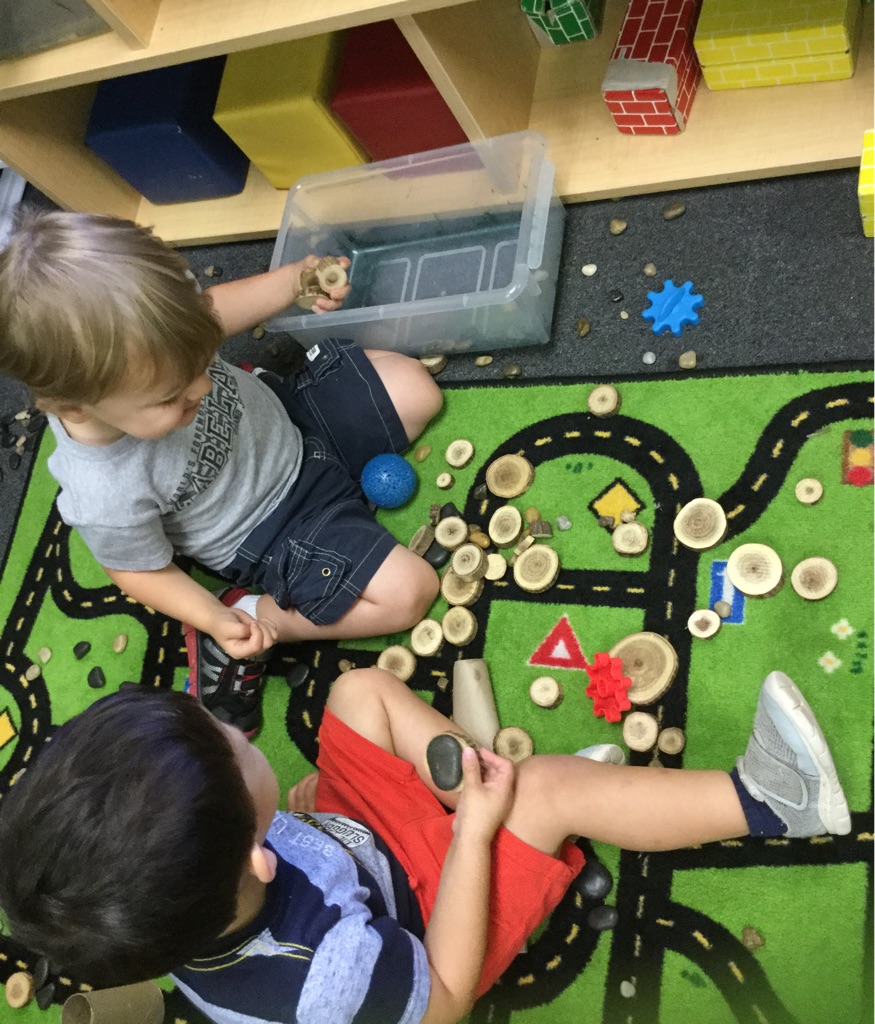
This summer is all about why play is so important. We couldn't think of a better way to start summer that a Family Day of Play. Parents were invited 5-6 to come in and play with the kids. Family Day of Play recognizes the importance of early learning and play in children's growth and development.
Here are a 10 things every parent should know about play from NAEYC.
1. Children learn through their play.
Don’t underestimate the value of play. Children learn and develop:
cognitive skills – like math and problem solving in a pretend grocery store
physical abilities – like balancing blocks and running on the playground
new vocabulary – like the words they need to play with toy dinosaurs
social skills – like playing together in a pretend car wash
literacy skills – like creating a menu for a pretend restaurant
2. Play is healthy.
Play helps children grow strong and healthy. It also counteracts obesity issues facing many children today.
3. Play reduces stress.
Play helps your children grow emotionally. It is joyful and provides an outlet for anxiety and stress.
4. Play is more than meets the eye.
Play is simple and complex. There are many types of play: symbolic, sociodramatic, functional, and games with rules-–to name just a few. Researchers study play’s many aspects: how children learn through play, how outdoor play impacts children’s health, the effects of screen time on play, to the need for recess in the school day.
5. Make time for play.
As parents, you are the biggest supporters of your children’s learning. You can make sure they have as much time to play as possible during the day to promote cognitive, language, physical, social, and emotional development.
6. Play and learning go hand-in-hand.
They are not separate activities. They are intertwined. Think about them as a science lecture with a lab. Play is the child’s lab.
7. Play outside.
Remember your own outdoor experiences of building forts, playing on the beach, sledding in the winter, or playing with other children in the neighborhood. Make sure your children create outdoor memories too.
8. There’s a lot to learn about play.
There’s a lot written on children and play. Here are some
NAEYC articles and books about play. David Elkind’s The Power of Play (Da Capo, 2007 reprint) is also a great resource.
9. Trust your own playful instincts.
Remember as a child how play just came naturally? Give your children time for play and see all that they are capable of when given the opportunity.
10. Play is a child’s context for learning.
Children practice and reinforce their learning in multiple areas during play. It gives them a place and a time for learning that cannot be achieved through completing a worksheet. For example, in playing restaurant, children write and draw menus, set prices, take orders, and make out checks. Play provides rich learning opportunities and leads to children’s success and self-esteem.
Take a look at all the fun we had during our Family Day of Play.